
Four ways money leaves a register, and what each one looks like in the data.
Voids, refunds, no sales, and comp abuse. Each has its own method, its own signature in the transaction journal, and its own test on video. This is the hub page, and there is a page below for each of the four.
92%
of surveillance leaders name internal theft and fraud a top threat, ahead of every other risk on the list
4
exception classes that account for most register loss: voids, refunds, no sales, comps
20
point of sale platforms and connectors eConnect reads without changing the register
Internal theft figure: Source: 2026 International Casino Surveillance Survey, conducted by Debra Hilgeman, Ph.D., Raving Consulting Company. Report page 78. Exception classes and connector count from the eConnect point of sale integration catalog published on econnect.ai/partners.
One page each, because they are not the same problem.
Operators lose money at the register in four distinct ways. Grouping them into a single report is why most register reviews find nothing. Each one below has its own detection rule and its own test on video.
Read the journal, score against peers, bind to the frame.
Read the journal
eConnect reads the live transaction journal from the point of sale system already installed. Every line, every tender, every reversal, as it happens.
Score against peers
Each employee is compared against the people working the same outlet on the same shift, so the outlier surfaces instead of a fixed threshold catching the busiest server every night.
Bind to the frame
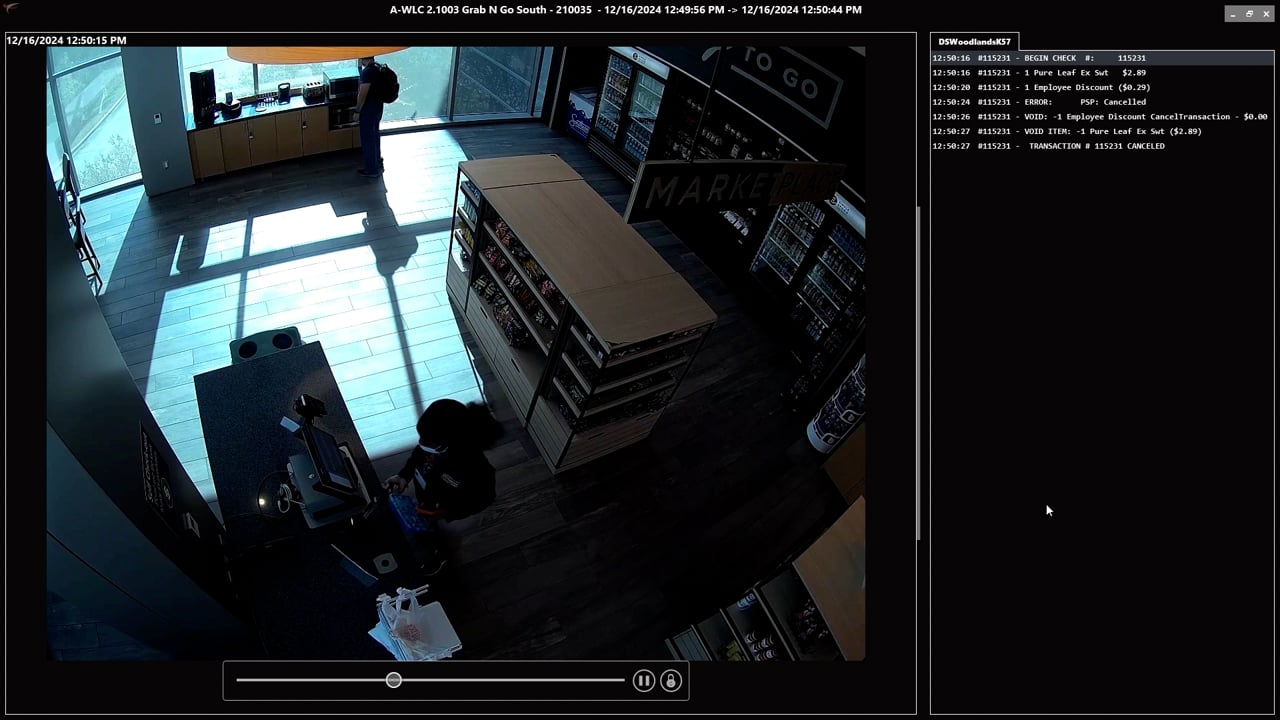
The exception carries its own timestamp, so the camera covering that terminal is located by the event. Nobody scrubs footage looking for it.
Raise it while it matters
High scoring exceptions push to a phone or a workstation in real time, with the video attached, rather than waiting for a monthly report nobody reads.
The outlets are where the register loss lives.
Restaurants, bars, quick service, and retail run the highest transaction volume on a casino property and carry the lightest supervision per transaction. That combination is why bartender and server schemes persist long after they would be caught anywhere on the gaming floor. Exception reporting closes the gap without putting a supervisor behind every terminal.
- ✓Every outlet compared against itself, shift by shift.
- ✓Employees ranked against peers, not against a fixed number.
- ✓The video attached to the exception, not searched for afterwards.
- ✓Case records that hold up in a human resources meeting or in court.
Keep the register you have.
eConnect reads the journal these platforms already produce. Nothing is replaced, and no new terminal is installed.
POS exception reporting, answered
- What is point of sale exception reporting?
- It is the practice of reviewing only the transactions that do not look like the rest, instead of reviewing everything. The system reads the register journal, scores each event against the behaviour of comparable employees, and surfaces the outliers. In a casino the classes that matter most are voids, refunds, no sales, and comps.
- Why is exception reporting better than reviewing reports?
- A busy food and beverage operation produces more voids and comps in a week than any team can review. A threshold based report either catches the busiest employee every night or catches nothing. Scoring against peers on the same outlet and shift is what separates a heavy workload from a pattern.
- Which point of sale systems does eConnect read?
- The major hospitality and casino platforms, including Oracle MICROS and Simphony, Agilysys InfoGenesis and LMS, Aloha, NCR, Toast, Square, Clover, Squirrel, Revel, Vivonet and Halo, and Gilbarco Passport, plus a generic point of sale interface for systems without a named connector. The register does not change.
- Does this require new cameras?
- No. eConnect binds the transaction to the video the property already records, from the recorder or video management system already installed.
- What is the difference between a void, a refund, a no sale, and a comp?
- A void reverses a sale that was rung. A refund pays money out of the drawer. A no sale opens the drawer without recording anything at all, so it carries no dollar value to sort by. A comp gives the sale away on the property’s authority. Each one is abused differently, and each needs its own exception class. There is a page here for each of the four.
- What do surveillance teams say the top threat is?
- Internal theft and fraud. In the 2026 International Casino Surveillance Survey, 92 percent of surveillance leaders named it a top concern for their department, ahead of every other threat on the list. Report page 78.
Bring us one week of your journal.
We will show you what exception based scoring surfaces in it, with the video attached.
Learn More